What is the difference between wholesale and retail suppliers?
If you’re selling on Amazon in Europe, one of the first decisions you’ll need to make is how to source your products. The two most common options are retail suppliers and wholesale suppliers.
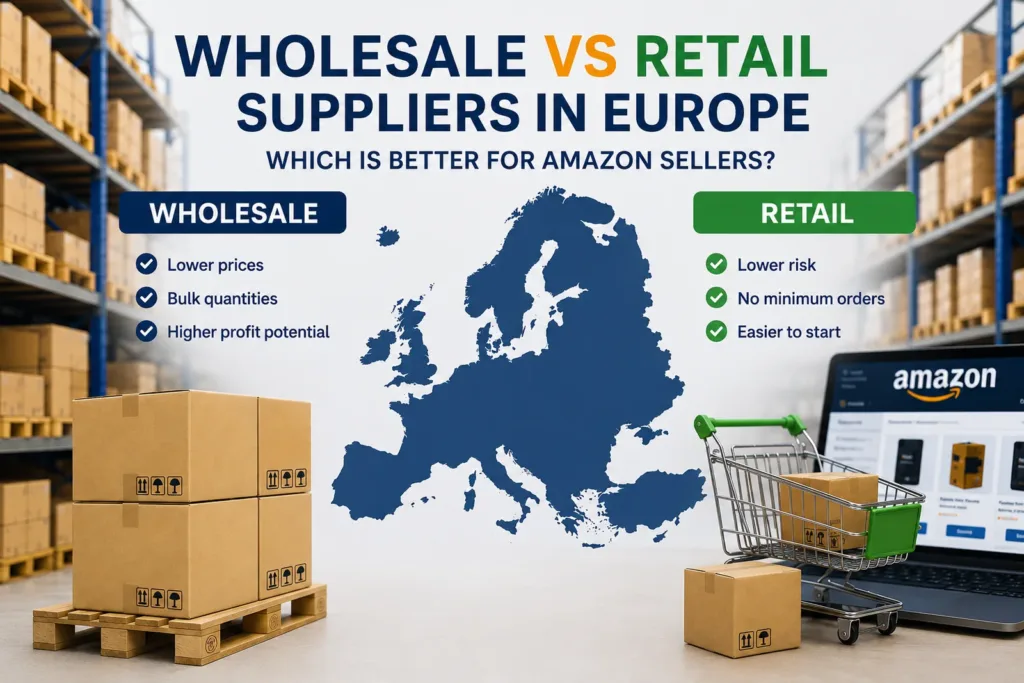
Retail suppliers are businesses that sell products directly to consumers, while wholesale suppliers sell in bulk, usually at lower prices.
Understanding the difference between these two sourcing models is essential if you want to build a profitable and scalable Amazon business.
Retail suppliers: How they work for Amazon sellers
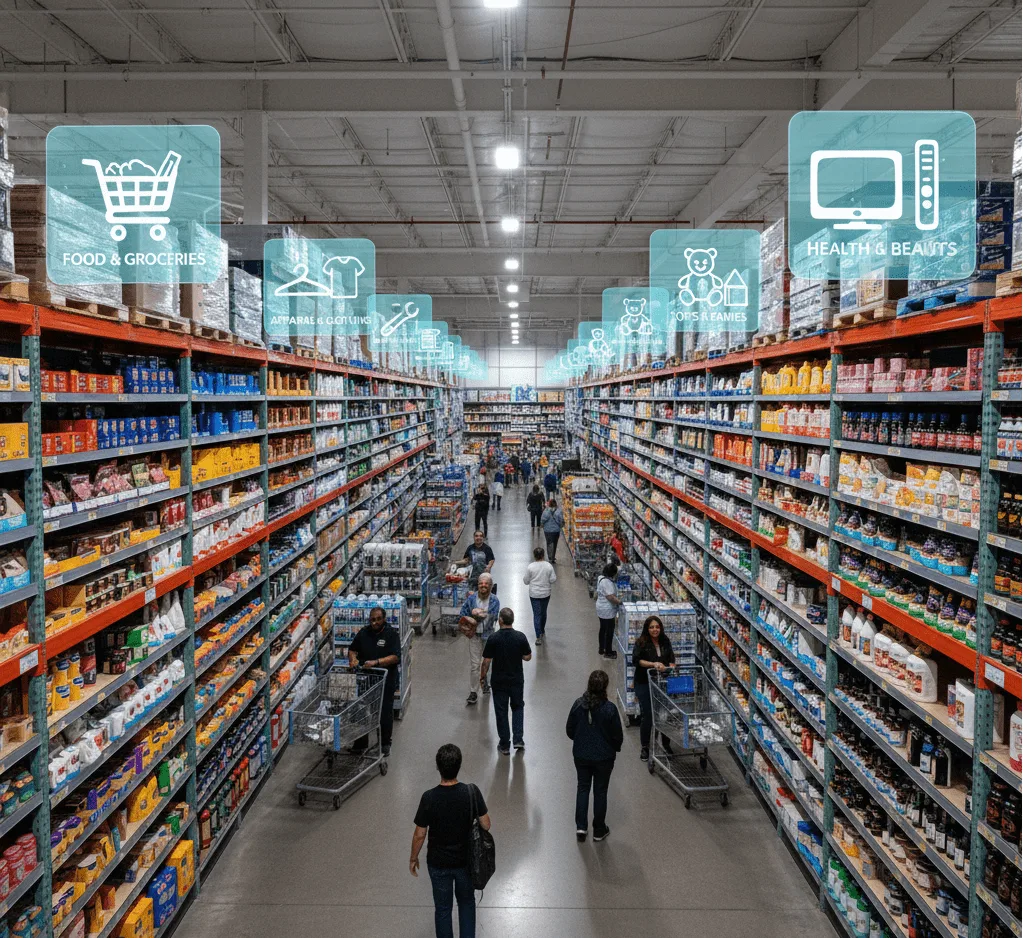
Retail sourcing is the foundation of online arbitrage. You buy products from online or physical stores and resell them on Amazon at a higher price.
Advantages of retail suppliers
- Easy to access — no business account required
- Low upfront investment
- Large variety of products
- Ideal for testing and learning
Retail sourcing allows you to start quickly and understand how the Amazon marketplace works without significant risk.
Limitations of retail sourcing
- Lower margins compared to wholesale
- Limited scalability
- Frequent stock issues
- High competition on popular products
Retail sourcing is effective in the beginning, but it becomes harder to scale over time.
When retail suppliers make sense
Retail sourcing is ideal if:
- You are just getting started
- You want to test products with low risk
- You are learning how supplier sourcing works
Wholesale suppliers: How they work for Amazon sellers
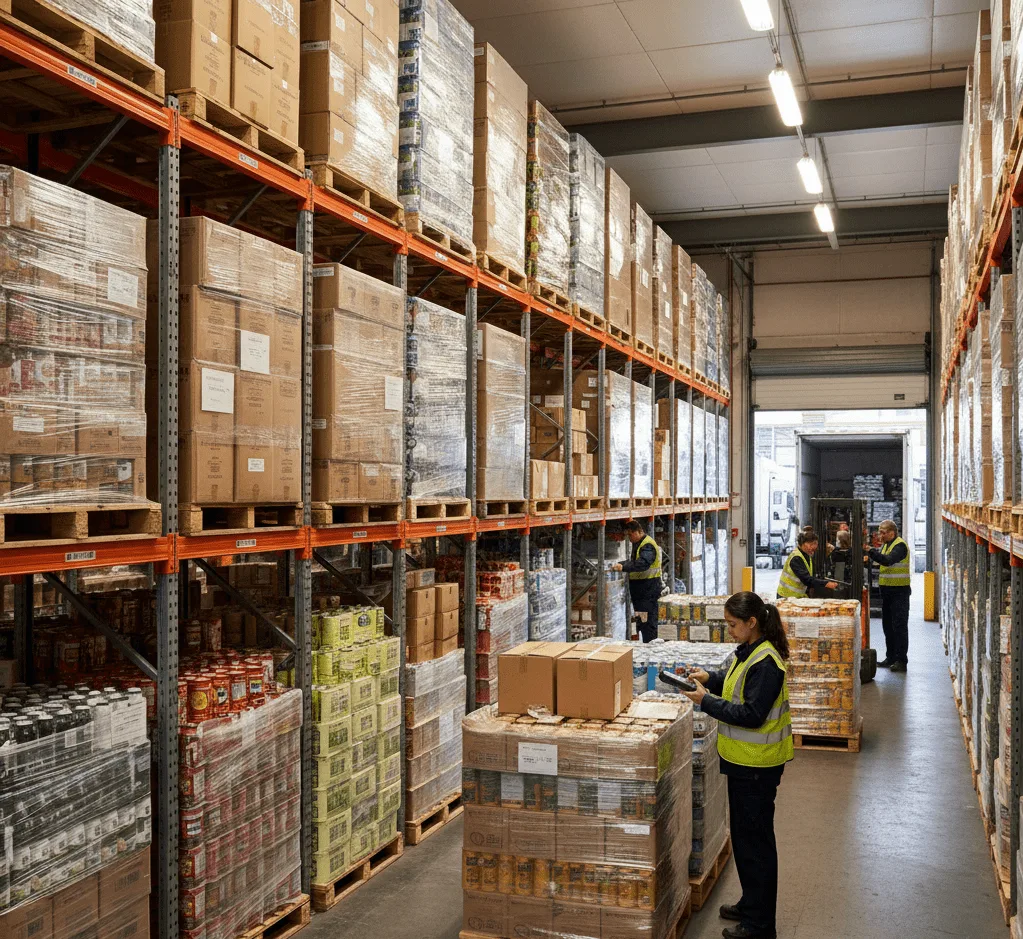
Wholesale sourcing involves buying products in bulk directly from suppliers, distributors, or brands, typically at lower prices.
Advantages of wholesale suppliers
- Higher profit margins
- More stable supply
- Better scalability
- Potential for long-term supplier relationships
Wholesale is often the next step for sellers who want to grow beyond basic arbitrage.
Limitations of wholesale sourcing
- Higher upfront investment
- Requires business verification
- More complex logistics
- Slower to get started
Wholesale requires more structure and planning, but it offers greater long-term potential.
When wholesale is the better option
Wholesale sourcing makes sense if:
- You already have experience selling on Amazon
- You want to scale your business
- You are ready to invest more capital
Wholesale vs retail suppliers: Key differences
Pricing and profit margins
Wholesale suppliers typically offer lower prices, which leads to higher margins. Retail sourcing often involves smaller margins due to higher purchase costs.
Scalability and growth potential
Retail sourcing is limited by product availability and competition. Wholesale allows you to scale by working with consistent supply and larger volumes.
Access to products and competition
Retail products are often widely available, which increases competition. Wholesale sourcing can give you access to less saturated products.
Risk and complexity
Retail sourcing is simpler and lower risk. Wholesale involves more complexity but offers more control and long-term stability.
Which option is better for Amazon sellers in Europe?
There is no single correct answer — it depends on your level and goals.
For beginners
Retail sourcing is usually the best starting point. It allows you to learn the basics without committing significant resources.
For intermediate sellers
At this stage, combining retail and wholesale can help you balance risk and growth.
For advanced sellers
Wholesale sourcing is typically the most effective option for scaling a business in the long term.
Many successful sellers in Europe use a hybrid approach depending on the opportunity.
How to find wholesale and retail suppliers in Europe
Regardless of your sourcing approach, finding reliable suppliers is essential if you want to build a sustainable Amazon business.
If you’re still learning how supplier sourcing works, this guide to finding Amazon suppliers in Europe will help you build a more structured approach.
Once you understand the fundamentals, the next step is working with real supplier data. Tools like Actorio allow you to access and analyze suppliers for Amazon FBA in Europe, helping you identify opportunities more efficiently.
How Actorio helps you analyze wholesale and retail suppliers
Evaluating suppliers manually can be time-consuming, especially when working with large catalogues.
Actorio helps you:
- Analyze supplier catalogues across Europe
- Compare supplier prices with Amazon data
- Identify profitable products faster
Instead of analyzing products one by one, you can rely on data to make better sourcing decisions and discover opportunities through suppliers for Amazon FBA in Europe
Final thoughts: Choosing the right sourcing strategy
Both wholesale and retail suppliers have their place in an Amazon business.
Retail sourcing is a great way to start, while wholesale offers the scalability needed for long-term growth.
The best strategy is not choosing one over the other, but knowing when to use each.
Frequently asked questions about wholesale and retail suppliers
Is wholesale better than retail for Amazon FBA?
Wholesale is generally better for scaling due to higher margins and stable supply, but retail is easier for beginners.
Can you combine wholesale and retail sourcing?
Yes. Many sellers use both methods depending on the opportunity and product availability.
Which is more profitable in Europe?
Wholesale typically offers higher margins, but retail sourcing can still be profitable with the right strategy.
Do I need a business to work with wholesale suppliers?
In most cases, yes. Wholesale suppliers usually require business registration and verification.