What are Amazon suppliers and why they matter
An Amazon supplier is any business that provides products you can resell on Amazon. This includes retailers, wholesalers, brands, and distributors.
If you’re working with online arbitrage or Amazon FBA, suppliers are the foundation of your business. Without reliable suppliers, it’s extremely difficult to find consistent and profitable opportunities.
Platforms like Actorio help streamline this process by analyzing large volumes of data and identifying opportunities much faster than manual research.
In Europe, supplier sourcing is even more critical. Unlike the US, the European market is fragmented across multiple countries, languages, VAT systems, and logistics networks. Strategies that work in one country may not translate directly to another.
Understanding how to source effectively in Europe is what separates occasional wins from a scalable business.
Types of Amazon suppliers in Europe
Not all suppliers offer the same advantages. Choosing the right type will directly impact your margins, risk level, and ability to scale.
Understanding the differences between wholesale and retail suppliers is key to choosing the right sourcing strategy, as not all suppliers offer the same advantages.
Retail suppliers
Retail suppliers are online or physical stores that sell directly to consumers. This is the most common starting point for online arbitrage.
- Easy to access
- No minimum order quantities
- Ideal for beginners
However, they tend to be less stable and harder to scale over time.
Wholesale suppliers
Wholesale suppliers sell products in bulk, typically at lower prices.
- Better margins
- More consistent inventory
- Stronger potential for scaling
They often require higher upfront investment and, in some cases, business verification.
Distributors and brands
Working directly with distributors or brands can give you access to less competitive products and more reliable supply chains.
- Long-term relationships
- Reduced competition
- Greater control over inventory
This approach requires more effort upfront but offers significant advantages as your business grows.
Online vs offline suppliers
Most sourcing today happens online, but offline suppliers—such as local distributors or trade shows—can still provide unique opportunities.
A combination of both approaches often leads to the best results.
Where to find Amazon suppliers in Europe
Finding suppliers is not about luck. it’s about using the right sources and working systematically.
Online supplier catalogues
Supplier catalogues are one of the most efficient ways to source products at scale. Instead of searching product by product, you can analyze large inventories and quickly identify potential opportunities.
Working with reliable suppliers across Europe helps you move from random sourcing to a more structured and repeatable process.
Marketplaces and B2B platforms
B2B marketplaces and wholesale directories can connect you with suppliers across Europe. They are useful for discovery, but require careful validation to avoid unreliable partners.
Brand websites and official distributors
Many brands publish lists of their authorized distributors. This is often one of the most reliable ways to find legitimate suppliers and reduce risk.
Trade shows and local suppliers
Although less scalable, trade shows and local distributors can provide valuable contacts and unique sourcing opportunities.
How to evaluate and choose the right supplier
Not every supplier is worth working with. Poor supplier selection can lead to low margins, stock issues, or even account risks.
Pricing and margins
Always evaluate:
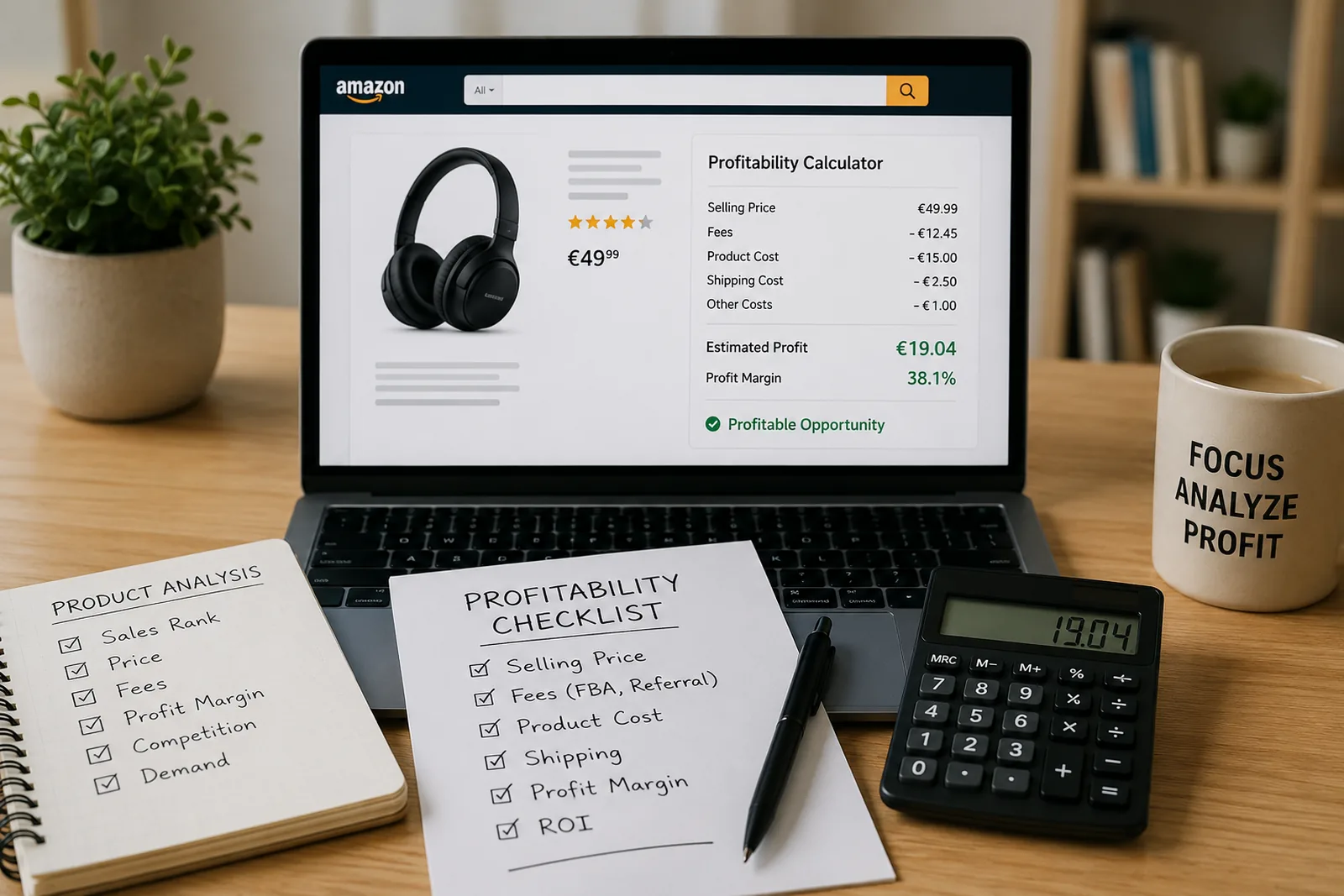
- Purchase cost
- Amazon selling price
- Fees and VAT
- Potential profit margin
A product is only profitable when every cost is taken into account, not just the purchase price.
Product availability and consistency
Look for suppliers that offer:
- Stable inventory
- Replenishable products
- Long-term availability
Consistency is key to building a sustainable business.
Shipping and logistics
Delivery times directly affect your competitiveness. Prioritize suppliers that:
- Ship quickly
- Operate within Europe
- Offer predictable delivery
Reliability and risk factors
Check:
- Product authenticity
- Invoice quality (critical for ungating)
- Return and refund policies
Reliability often matters more than price.
Common mistakes when looking for suppliers
Many sellers struggle not because of the market, but because of their approach.
Relying on random searches
Manually browsing products without a system is inefficient and difficult to scale.
Skipping product validation
Finding a product is only the first step. You must validate demand, competition, and potential risks.
Before investing, it’s essential to validate a product before selling to avoid costly mistakes.
Choosing inconsistent suppliers
A one-time deal is not a business. Focus on suppliers that can provide ongoing opportunities.
Ignoring scalability
If your sourcing process cannot scale, your business won’t either.
How to find profitable products from suppliers
Finding suppliers is only half the process. The real objective is identifying profitable products.
Match supplier prices with Amazon data
Compare:
- Supplier price
- Amazon selling price
- Fees
- Competition
Identify demand and competition
Focus on products with:
- Consistent demand
- Stable Buy Box ownership
- Manageable competition
Use structured product research
Rather than guessing, rely on data-driven decision-making.
Learning how to find profitable products is essential for improving your sourcing results.
Manual vs Automated supplier sourcing
Limitations of manual sourcing
Manual sourcing may work initially, but it quickly becomes:
- Time-consuming
- Inconsistent
- Difficult to scale
Benefits of automation
Automation allows you to:
- Analyze large product catalogues quickly
- Identify opportunities faster
- Reduce human error
How tools improve efficiency
Modern tools connect supplier data with real-time Amazon insights, making sourcing significantly more efficient.
Exploring tools for online arbitrage can help you transition from manual work to a scalable system.
How Actorio supports your sourcing process
Sourcing manually can take hours every day. Actorio simplifies the process by:
- Scanning supplier catalogues across Europe
- Matching supplier data with Amazon market insights
- Highlighting profitable opportunities instantly
Instead of analyzing products one by one, you can rely on a structured system that improves both speed and accuracy.
You can explore the available pricing plans to see how Actorio fits your workflow.
Final thoughts: Building a scalable sourcing strategy
Finding Amazon suppliers in Europe is not about discovering a single opportunity, it’s about building a repeatable system.
By combining:
- Reliable suppliers
- Clear validation criteria
- Efficient tools
you can move from occasional success to a scalable business.
If you’re just getting started, understanding online arbitrage on Amazon will give you a solid foundation.
Successful sellers don’t rely on luck—they rely on systems that consistently uncover opportunities.
Frequently asked questions about Amazon suppliers in Europe
What are the best Amazon suppliers in Europe?
The best Amazon suppliers in Europe depend on your business model. Retail suppliers are ideal for beginners in online arbitrage, while wholesale suppliers and distributors are better suited for scaling. The key is to find suppliers that offer consistent stock, competitive pricing, and reliable delivery.
How do I find reliable Amazon suppliers in Europe?
You can find reliable Amazon suppliers by using supplier catalogues, B2B platforms, brand websites, and distributor networks. It’s important to validate each supplier based on pricing, product availability, and reliability before working with them.
Do I need a business to buy from suppliers in Europe?
Not always. Retail suppliers usually don’t require a business account, making them accessible for beginners. However, wholesale suppliers and distributors often require business registration and may ask for documentation.
How can I know if a supplier is profitable?
To determine if a supplier is profitable, you need to compare their prices with Amazon selling prices, taking into account fees, VAT, and competition. Using structured product research methods helps identify opportunities more accurately.
Can I use tools to find Amazon suppliers in Europe?
Yes. Tools like Actorio allow you to scan supplier catalogues, compare data with Amazon, and identify profitable opportunities much faster than manual sourcing.
How many suppliers do I need to succeed on Amazon?
There is no fixed number, but successful sellers usually work with multiple suppliers to diversify their sourcing and reduce risk. Relying on a single supplier can limit your growth.